
For Leila, this visit was an especially meaningful one. Sarajevo is the city at the heart of her family story, her father’s hometown, and a place she has considered her second home since childhood. Although she grew up in Bern, her experience of being shaped by both cultures has become an important part of her artistic and personal identity. Today, she sees this diversity as a source of inspiration and something that helped her shape perspective as an artist.
From Bern and Sarajevo to New York, her songs grew out of real feelings and situations, and gradually developed into a recognizable presence on the Swiss music scene. But this trip to Bosnia was also about returning, reconnecting with her roots and exploring the ways in which cultures can meet through sound.
Creative songwriting workshop
We began the programme in Zenica with a creative songwriting workshop, where LEILA, together with her music producer and drummer, worked with young people interested in songwriting, music, and the process behind creating a song.
The workshop was held at the premises of the “Naša djeca” Zenica Association (Radiyo Active), while also supporting the local youth radio and creating an opportunity for participants to learn more about the journey of an artist who is actively working on the European music scene.
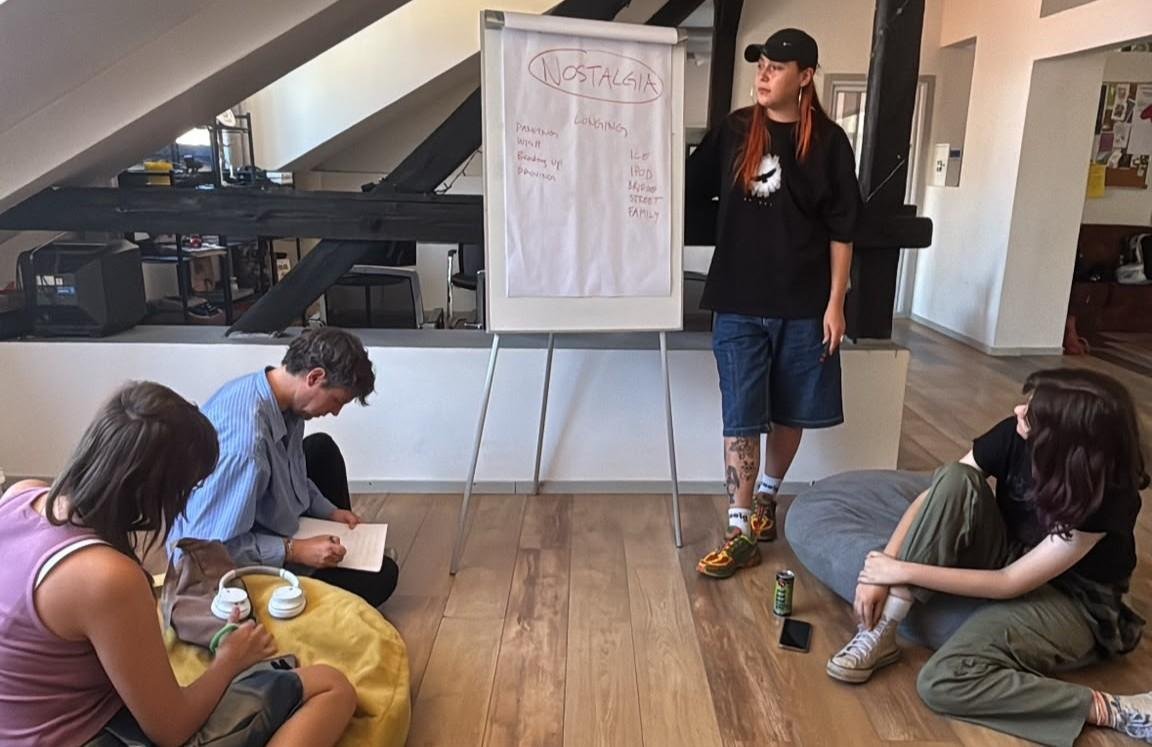
Rather than simply talking about the music-making process, participants had the chance to experience it from the inside. They found out how a song begins, how an idea develops, and how sound can influence emotion before we even hear the lyrics.
One of the activities involved guessing the possible lyrics or message of a song based only on its instrumental. This way participants explored how different sounds can evoke particular images, feelings, and associations. Later, through a simple technique of randomly combining words, they began creating their own sentences, which gradually developed into song lyrics.
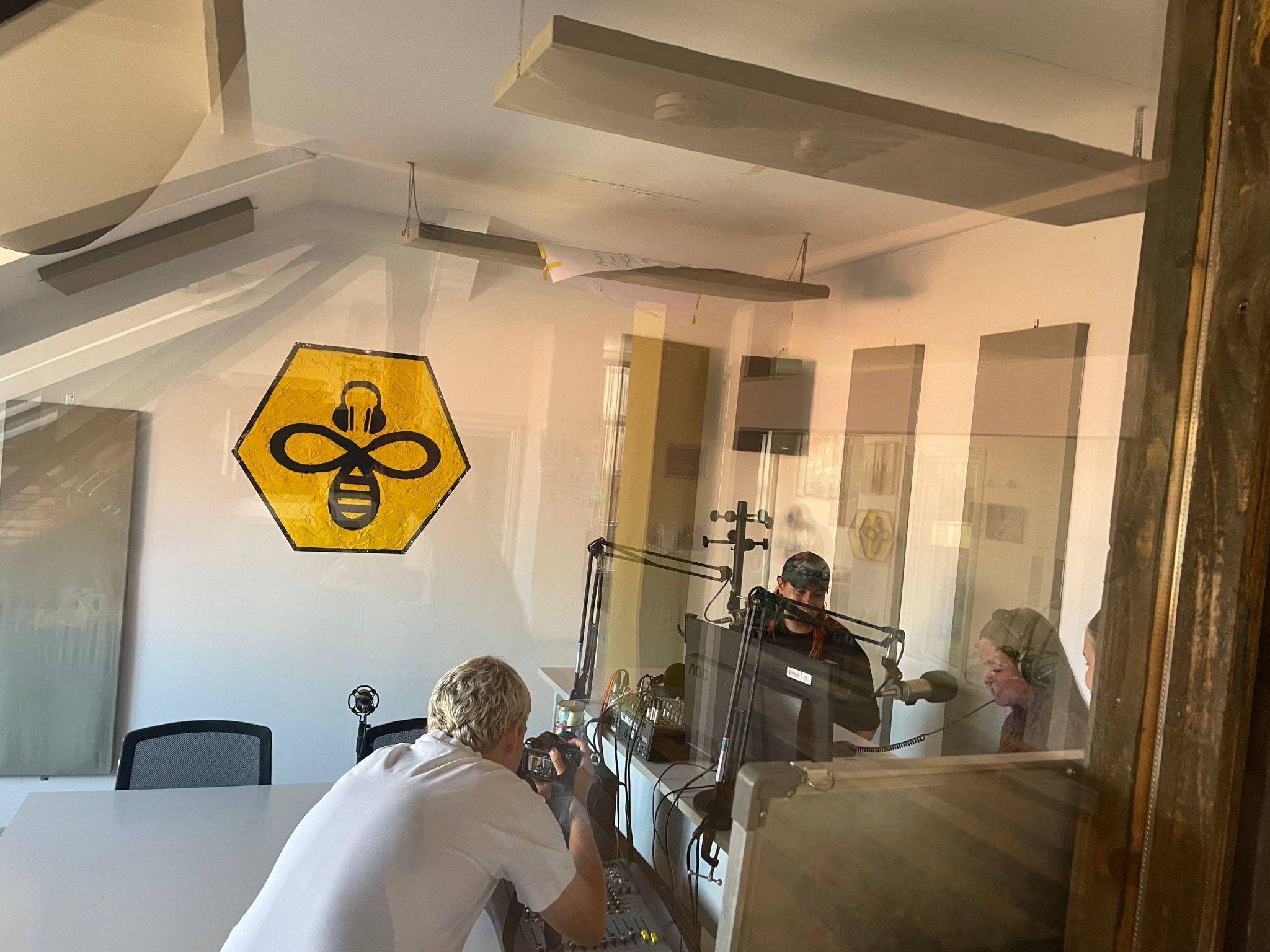
Alongside the workshop, we also recorded a radio interview with the young team at Radio Active Zenica, highlighted Leila’s musical journey and introduced her story to the local youth audience.
Jam session: Meeting with Sarajevo Pop Rock School
On August 14th, the program moved to Sarajevo, where LEILA participated in a collaborative jam session with local artists at the Sarajevo Pop Rock School. The contrast between a formal concert and an intimate jam session created space for authentic exchange and spontaneous creation. Together with musicians from the Sarajevo Pop Rock School, LEILA played, experimented, and explored the possibilities of a shared musical language.
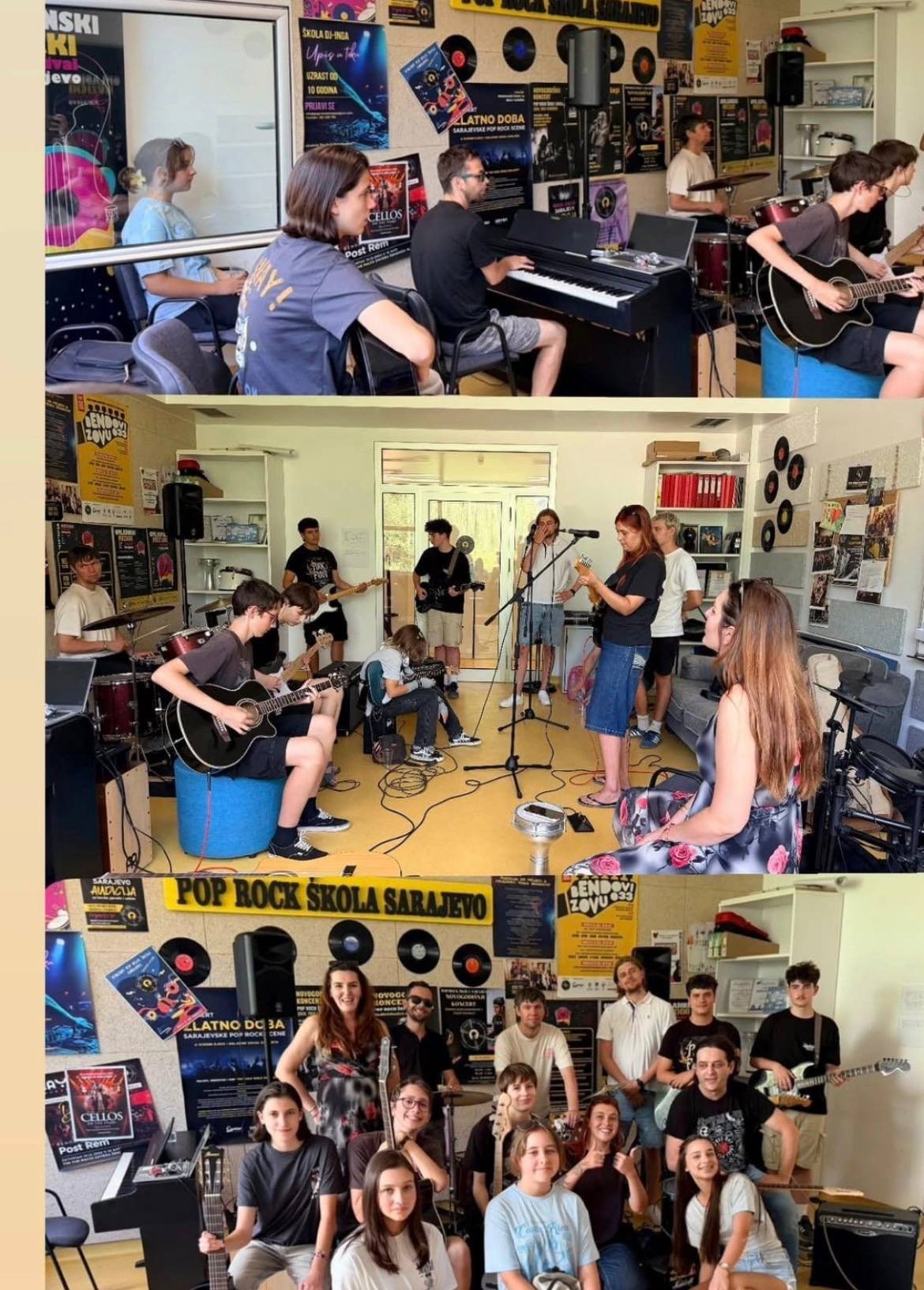
This meeting was not just about playing together – it was an opportunity for them to get to know each other, connect, and explore potential paths of collaboration between the Swiss singer-songwriter and the local music scene. In that informal-creative environment, the power of music as a language that transcends the boundaries of experience and enables genuine connection between artists from different backgrounds became evident.
Sounds of belonging: A panel on music, identity and the challenges music can solve
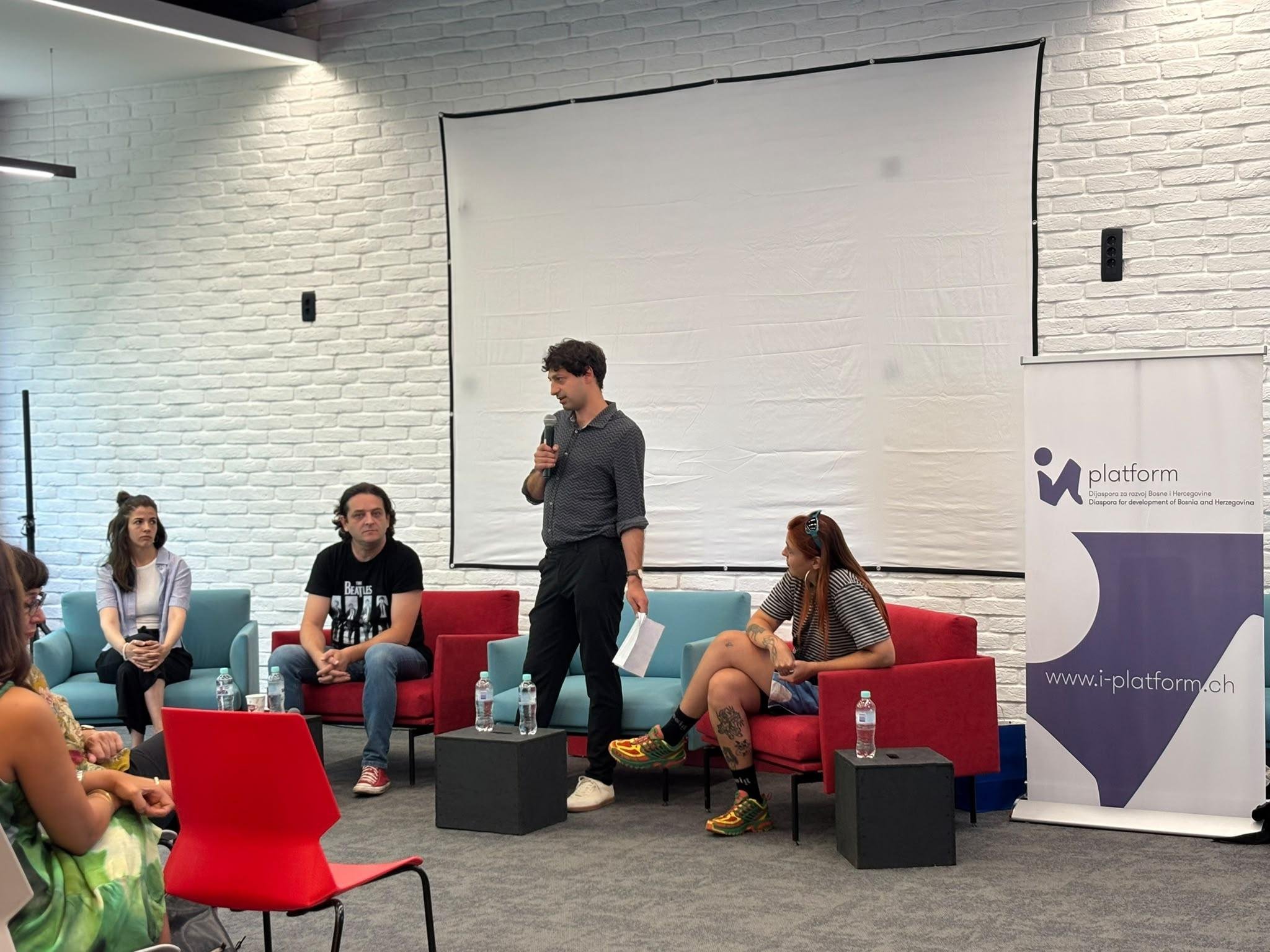
The following day, August 15th, the program opened to a larger group of participants when the panel discussion "Sounds of Belonging" was held at Tershouse.
The panel brought together three speakers from different generations, experiences, and musical paths: LEILA, Nataša Mitrović, and Haris Abdagić.
The discussion was moderated by Janis Fahrländer, a journalist from Swiss public radio SRF and an editor who covers the Balkans region.
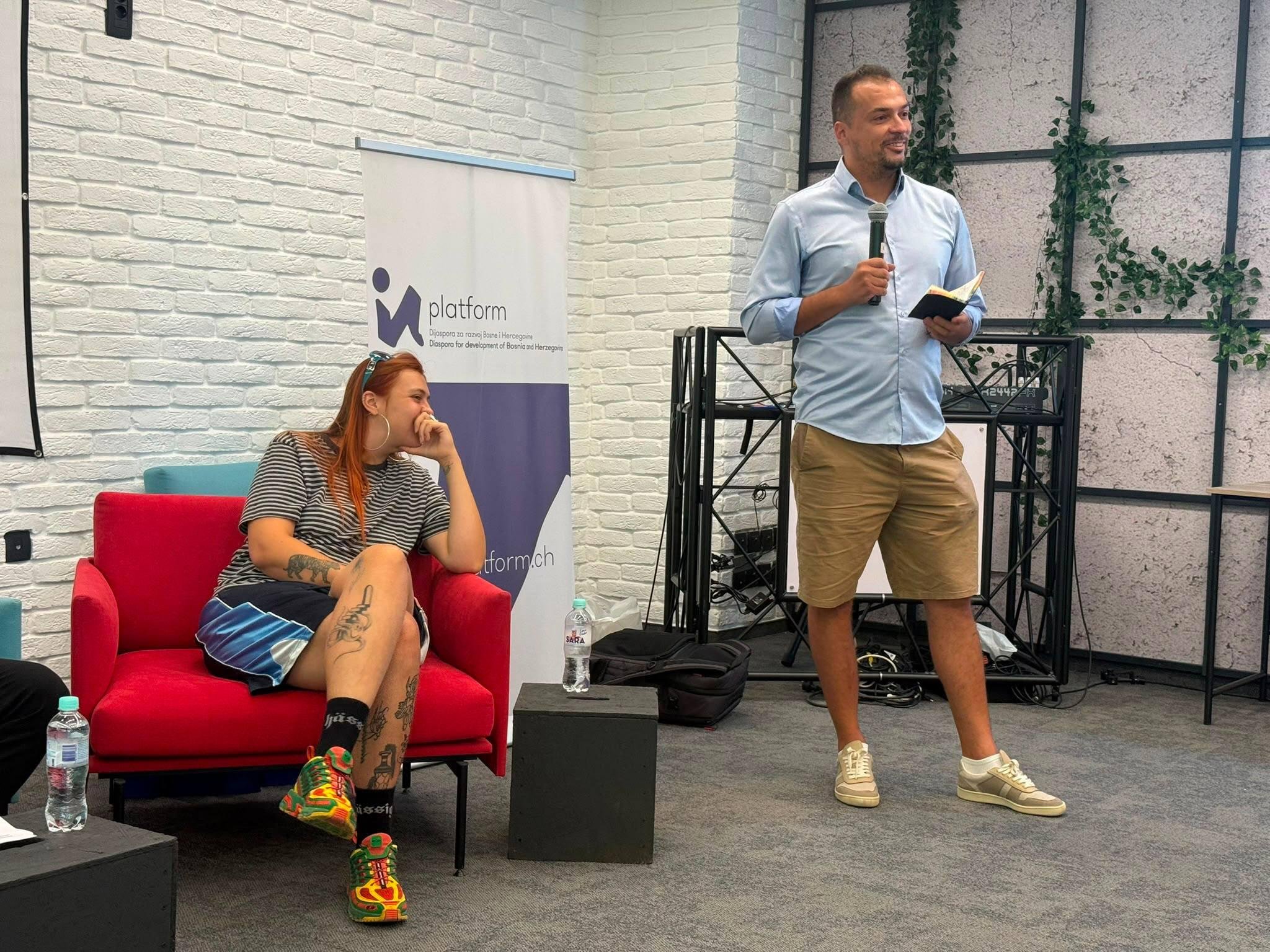
LEILA
LEILA spoke about her musical journey, growing up between Swiss and Bosnian culture, and some of the challenges that can come with such an experience, such as her last name enabling her some opportunities. When she was younger, she often felt caught between different worlds and struggled with the feeling that she did not fully belong to either.
Yet again, the ability to exist from both cultures has given her a chance to develop her own perspective and find a space for artistic expression that is uniquely hers. Her Bosnian and Swiss experiences meet and coexist in her music.
Leila has spent summers in the city of Sarajevo since she was young, and her connection to it goes beyond family heritage. Her father grew up here, her grandfather gave her her first guitar here, and Sarajevo became a place she returns to for energy and inspiration. She even wrote part of her album here.
As a young girl, she began exploring Bosnian music on her own, and among the songs she really loves are “Daleko je Bosna” by Šemsa Suljaković and “Take Me to America” by Dubioza Kolektiv.
Nataša Mitrović
Nataša Mitrović, an academic, member of i-dijaspora, and a second-generation member of the Bosnian diaspora in Switzerland, brought the perspective of a generation whose identity was also shaped between Bosnia and Herzegovina and Switzerland.
She spoke about the ways Bosnian culture continues to evolve and spread through the diaspora, as well as the importance of giving younger generations the opportunity to nurture their roots and language, and how it even spreads beyond ethnic Bosnians.
Music held also had an important place in her story as something capable of reaching places that words sometimes cannot. She also shared her own story of heritage and reflected on how music breaks emotional barriers in families and brings out something deeply human in all of us.
Haris Abdagić
Bosnian musician Haris Abdagić spoke from the perspective of the local cultural scene and his own experience of living as a refugee. His story highlighted another dimension of music, the way art can become a place of safety during moments when everything around us is changing.
He spoke about his days as a refugee and the role that music and his guitar played in his life. In those circumstances, music became a way for him to stay connected to himself and find a sense of community.
He also reflected on the local music scene and the importance of connecting artists from Bosnia and Herzegovina with the diaspora, as well as the role of spaces and organisations such as Sarajevo Rock School in supporting new generations of musicians.
Three different stories, three different experiences, and three different perspectives on music but one shared idea, that sound can offer a sense of belonging itself.
Her first time performing for a Sarajevo audience
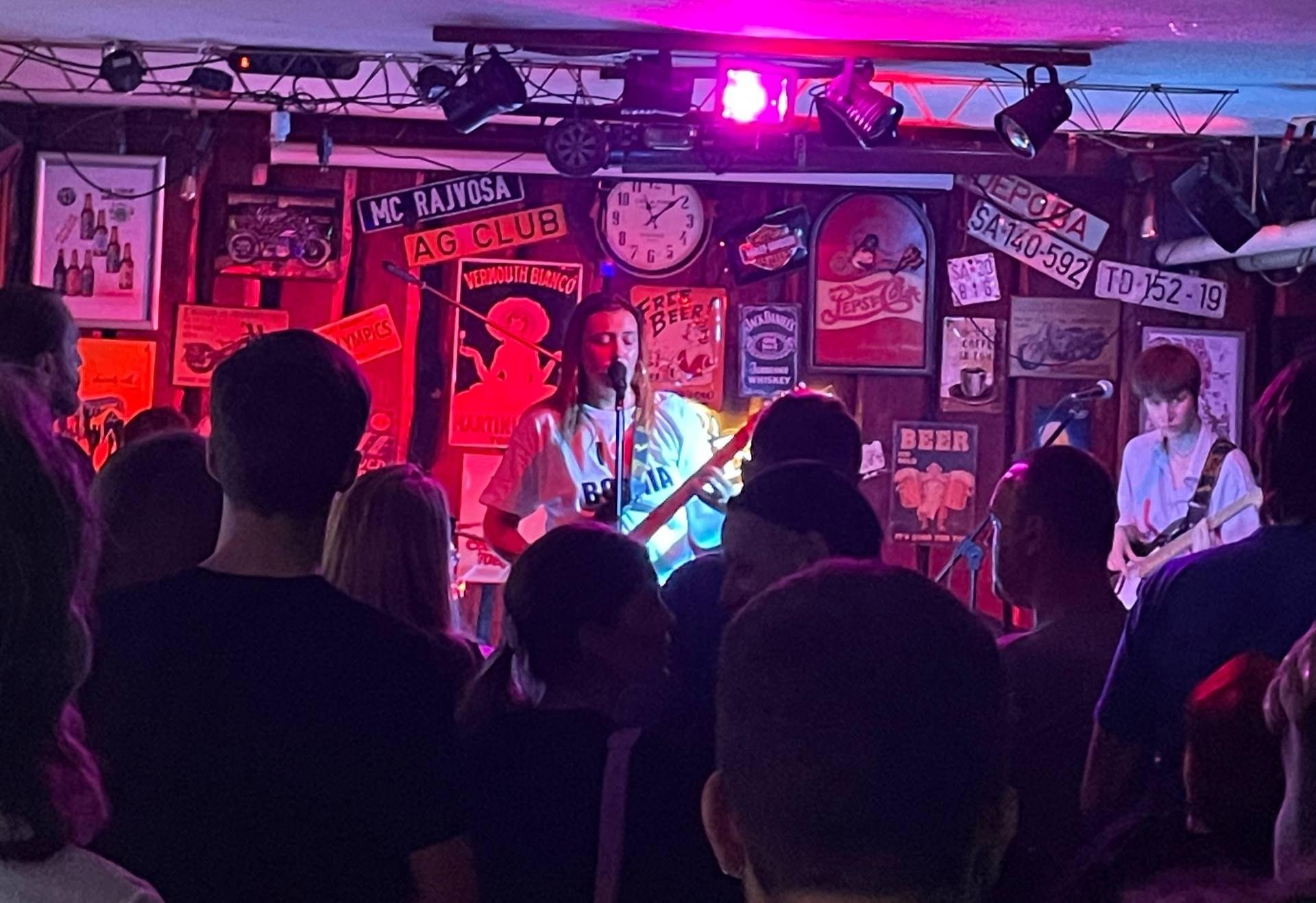
That same evening, August 15, LEILA performed her first concert in Sarajevo at AG Club, bringing the three-day programme to its final and most anticipated moment.
For such a young artist who has already built an audience in Switzerland, performing in Sarajevo carried a completely different kind of meaning and the concert brought together Bosnians and Herzegovinians, members of the diaspora, Swiss guests, family, friends, and an audience that was only beginning to discover Leila. Different people, backgrounds, and connections to Bosnia came together through the music of a new generation.
The performance lasted around an hour and a half and included “Gun to my Head”, currently her most recognisable hit, which has reached over 5 million streams on Spotify. The song had already introduced Leila to a wider Swiss audience, and its success helped open the door to further growth and collaborations on the European music scene.
And she came home!
Leila’s sense of belonging is built through people, language, family stories, the scents of a city she has known since childhood, and a song she knows by heart. After carrying Sarajevo with her for years, LEILA finally came home this August and told her story through music.
The entire program was supported by the Swiss Embassy in Bosnia and Herzegovina, and implemented by i-platforma in collaboration with Naša djeca Zenica and the Sarajevo Pop Rock School.