
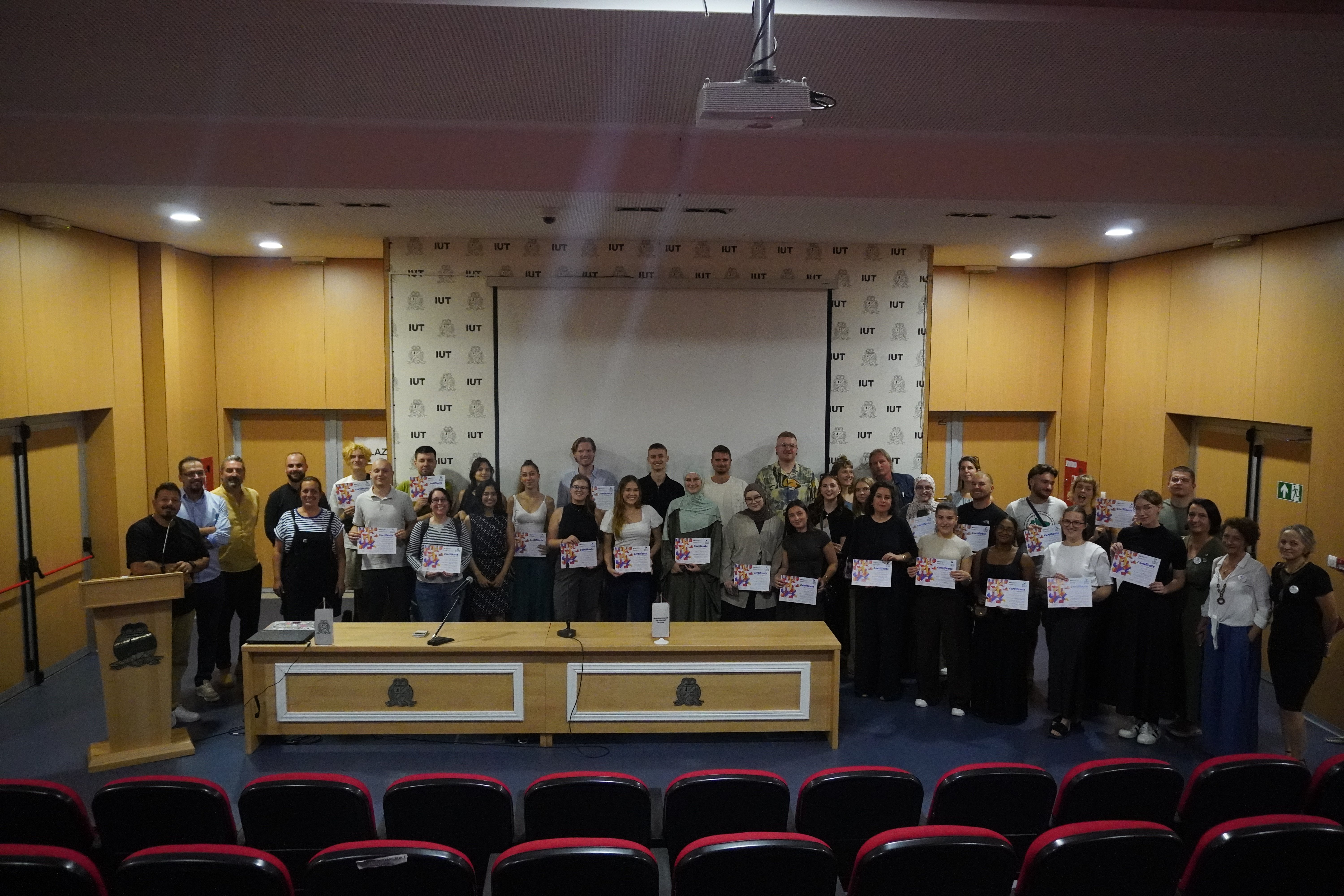
The Swiss Balkan Design Bridge 2026 brought participants together in Travnik for an intensive week dedicated to Design Thinking, innovation and cross-cultural collaboration.
Working in international teams, the students addressed four very different real-world challenges provided by GS-TMT, Pharmamed, i-platform and Travnik. Throughout the week, they moved from understanding complex problems and questioning assumptions to generating ideas, developing concepts and finally presenting their solutions to the organisations behind the challenges.
But the Swiss Balkan Design Bridge was about much more than finding answers. It was equally about learning how to ask better questions, understanding different perspectives and discovering what becomes possible when people from different backgrounds work together.
Four challenges, one collaborative approach
At the heart of the programme were four challenges representing different sectors and dimensions of economic and social development.
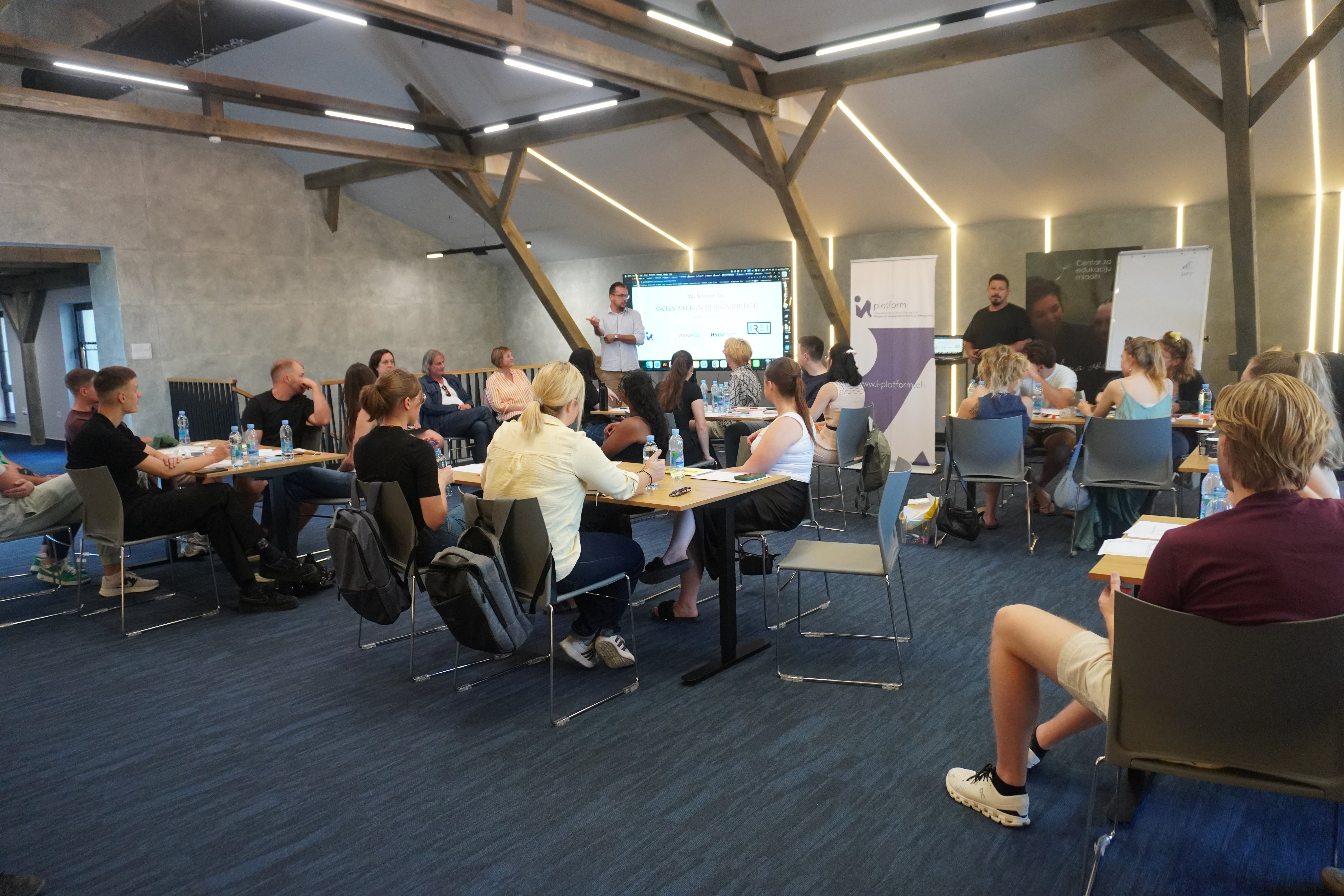
GS-TMT introduced participants to a challenge rooted in industrial manufacturing and innovation. The students explored how processes, technology and people interact and considered new ways of approaching challenges within an industrial environment.
With Pharmamed, the teams entered the field of pharmaceuticals and healthcare, examining the relationship between products, information and the needs and behaviour of customers.
The i-platform challenge shifted the focus towards networks, diaspora and international cooperation. Participants explored ways of strengthening connections and creating lasting value between Bosnia and Herzegovina and its communities abroad.
Finally, the Travnik challenge turned the city itself into a space for innovation. Participants examined questions related to public space, urban development and the needs of the people who live in and experience Travnik.
Despite their differences, all four challenges shared one principle: the students were not expected to arrive with ready-made answers. Instead, they first had to understand the people and contexts behind the problems.
Swiss Balkan Design Bridge 2026 From challenges to ideas
The teams worked through the different stages of the Design Thinking process, combining research, observation, discussion, experimentation and creativity.
The beginning of the programme was dedicated to understanding the challenges and establishing a common foundation within the newly formed international teams.

A visit from a representative of the Embassy of Switzerland in Bosnia and Herzegovina provided an additional perspective during the week and highlighted the wider importance of cooperation and exchange between the two countries.
By Wednesday, the participants had reached an important stage of the process. Instead of simply accepting the challenges as originally formulated, the teams reviewed their findings and worked on defining - and where necessary redefining - the problems they actually wanted to solve.
That process required them to challenge assumptions and look beneath the surface of the original questions.
Discovering the region beyond the classroom
The Swiss Balkan Design Bridge deliberately extended beyond workshops and project rooms.
During a joint excursion, participants explored important parts of the history and cultural heritage of Central Bosnia. Among the places visited were the medieval Stecci necropolis at Maculje and the Smrike Memorial near Novi Travnik, designed by architect Bogdan Bogdanovic.
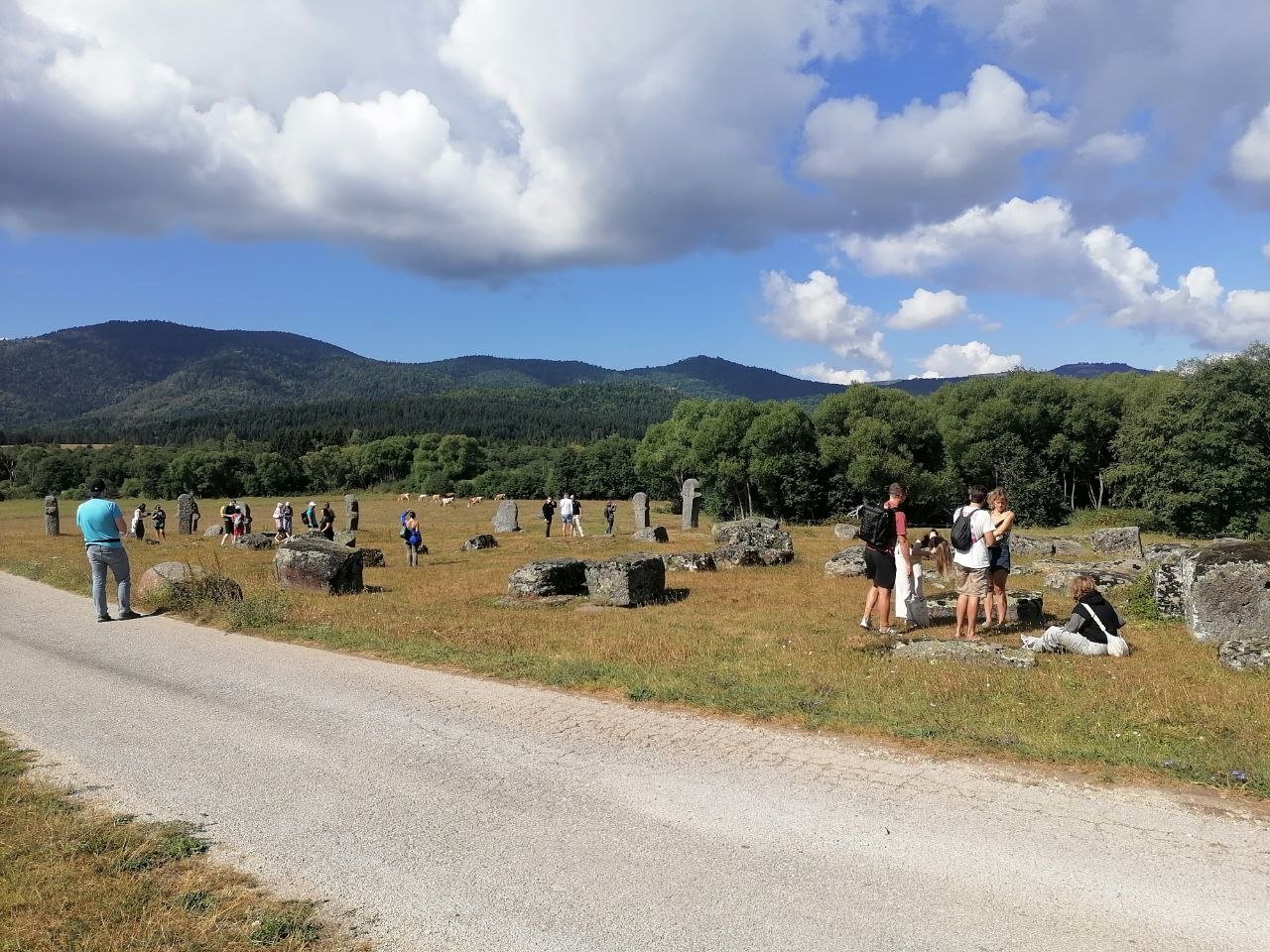
These experiences created an opportunity to encounter the region from a different perspective and complemented a programme otherwise centred around innovation, business and problem-solving.
They also reflected an important element of the Swiss Balkan Design Bridge: understanding another country cannot happen through project work alone. Shared meals, conversations, excursions and informal moments between participants became an equally important part of the learning experience.
Ideation, coaching and refinement
On Thursday, attention shifted from defining problems towards developing solutions.
During the ideation phase, the teams generated a broad range of possible approaches before selecting and further developing those they considered most promising. Lea Meister supported the participants during this stage, helping the teams structure, challenge and develop their ideas.Swiss Balkan Design Bridge 2026
The groups subsequently presented the current state of their projects during coaching sessions with the professors. Feedback allowed them to question assumptions once more, identify weaknesses and refine their concepts before the final presentations.
The objective was not simply to produce the most impressive idea, but to develop proposals that responded meaningfully to the challenges and the people behind them.
Empathy as the starting point
A central element of the programme was the empathy phase. Before moving towards solutions, the students were encouraged to understand the needs, experiences and perspectives of the people connected to each challenge.
A member of the educational team specifically guided the participants through this part of the Design Thinking process, supporting the teams in gathering insights and translating them into a clearer understanding of the problems they were addressing.
From ideas to real-world solutions
Friday marked the culmination of the week.
Representatives of the participating organisations joined the students for the final presentations, during which the four teams presented the concepts and solutions they had developed throughout the programme.

The results demonstrated the value of bringing together different academic disciplines, experiences and cultural perspectives. The organisations received fresh approaches to their challenges, while the students gained experience working with real stakeholders and presenting solutions developed under real-world conditions.
For the participants, the presentations represented the final stage of an entire Design Thinking journey - from uncertainty and exploration to a structured proposal.
The programme concluded with a certificate ceremony, celebrating the work and commitment of everyone involved.
More than Design Thinking
What remains after a week like this cannot be measured only through presentations, prototypes or certificates.
The Swiss Balkan Design Bridge creates a space in which students, educators, companies, institutions and communities can meet on equal ground and learn from one another.Swiss Balkan Design Bridge 2026
The 2026 edition continued the programme's combination of formal and non-formal education, theory and practice, and cross-cultural exchange.
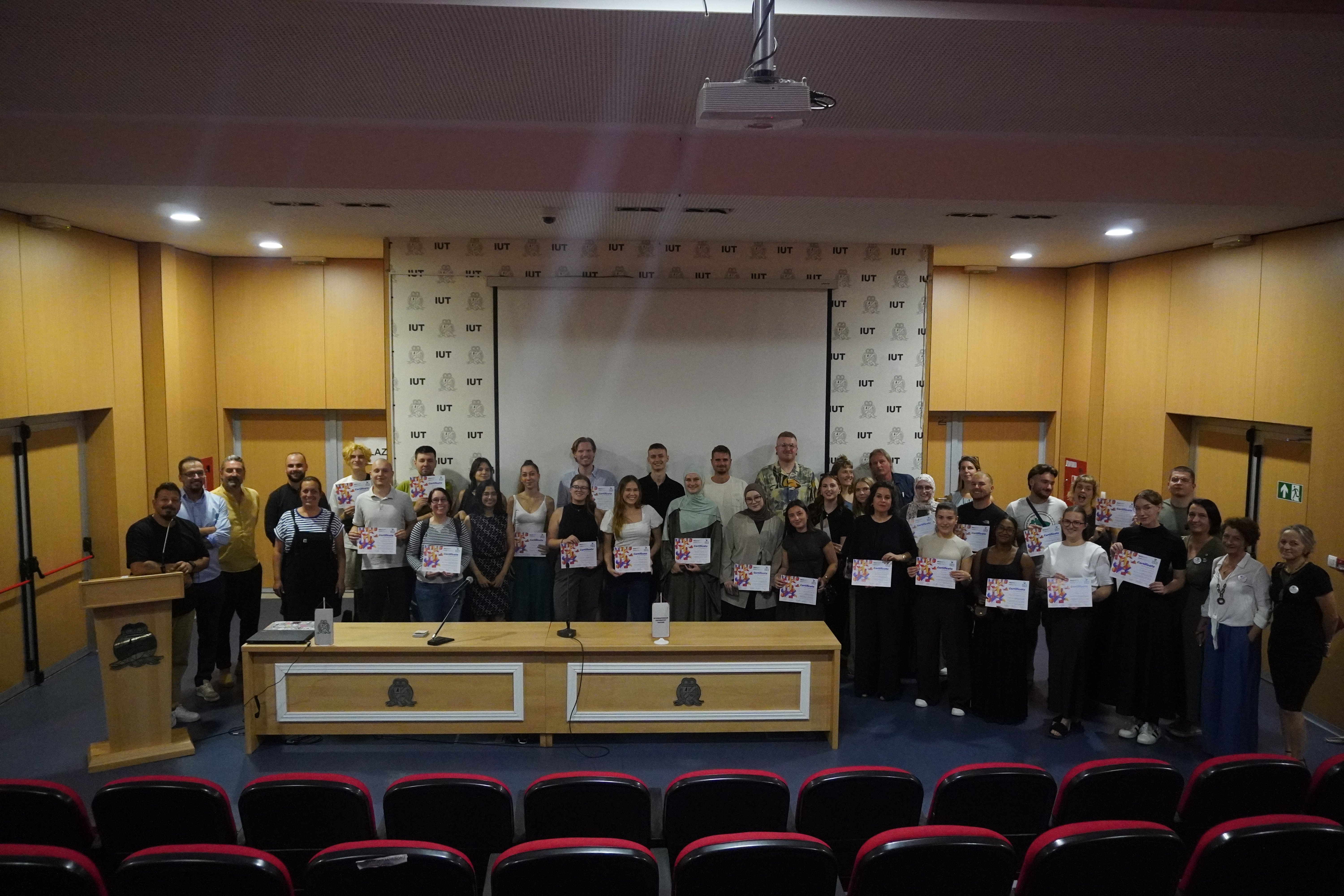
For one week, people from Switzerland and Bosnia and Herzegovina worked together, challenged one another's assumptions, discovered another culture and developed ideas for real organisations and communities
In the end, the Swiss Balkan Design Bridge is about more than Design Thinking. It is about connecting disciplines, institutions, perspectives, people and cultures - and turning those connections into ideas for the future.
Acknowledgments
The Swiss Balkan Design Bridge 2026 would not have been possible without the commitment and support of the institutions, organisations and people behind the programme:
- Movetia - Swiss National Agency for Mobility and Exchange
- IREI (Institute for Development and European Integration), for supporting of the project activities
- Lucerne University of Applied Sciences and Arts (HSLU), social work and business department as academic partner
- i-platform / i-dijaspora, for the implementation and coordination of the programme
- the educational team, professors, mentors and coaches who guided the participants throughout the Design Thinking process - Nermin Zejnilović, Lea Meister, Sanela Šadić, Andreas Jaeger Fontana, Oliver Kessler and Ivica Petrušić
- the City of Travnik and the local institutions supporting the programme
- Our local coordinator Enes Škrgo for organising additional activities
- the Embassy of Switzerland in Bosnia and Herzegovina for its engagement and contribution to the international exchange
- the 2026 challenge partners GS-TMT, Pharmamed, i-platform and Travnik, whose real-world challenges formed the foundation of the students' work
The Swiss Balkan Design Bridge is funded by Movetia - Swiss National Agency for Mobility and Exchange and IREI (Institute for Development and European Integration) and implemented by i-platform in partnership with the Lucerne University of Applied Sciences and Arts (HSLU).
Article prepared by Albion Osaj.